How to Start Day Trading Futures With a Prop Firm Account
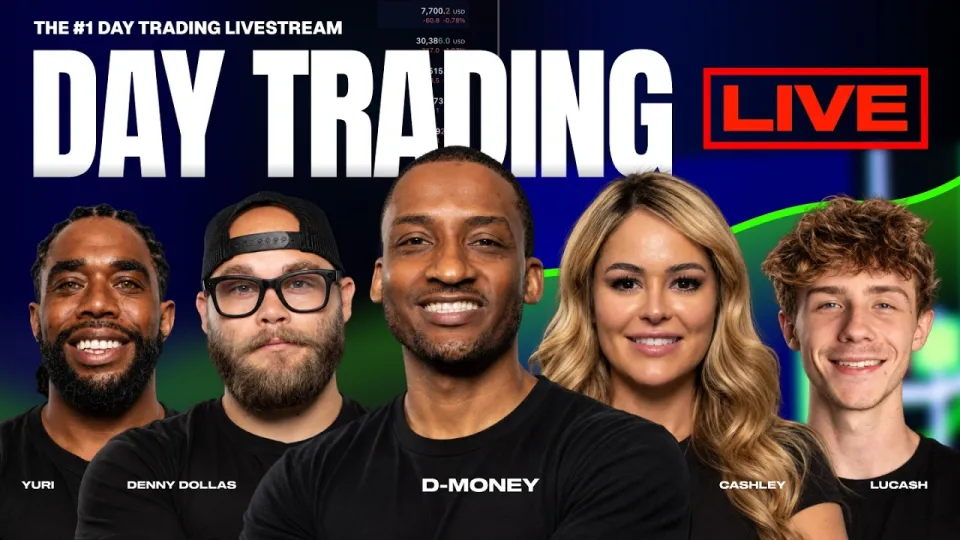
Video: LIVE DayTrading! #1 Watched Futures Trading Show!
Want articles like this for your own video to promote it on YouTube and Google? Order them through the Telegram bot @sat_sit_bot. Articles with your video embedded are written and posted by the bot itself — on popular topical sites (no ads). Your first 50 articles are free.
· based on the channel Patrick Wieland
Day trading futures with a prop firm means trading the firm's capital under a fixed rule set: pass an evaluation by hitting a profit target without breaching a daily loss limit or a trailing drawdown, then trade a funded account and collect a share of the profits. The fastest realistic path is to pick one liquid index futures contract, learn its tick value cold, and size every trade so a single loss costs no more than 1% of the account. That single discipline matters more than any indicator, because prop firm rules punish drawdown far harder than they reward a big win.
What day trading futures actually involves
Day trading futures is the practice of opening and closing contracts within the same session, usually on index products such as the E-mini Nasdaq 100 (NQ), the Micro Nasdaq 100 (MNQ), the E-mini S&P 500 (ES) and the Micro S&P 500 (MES). Unlike stocks, futures trade nearly 23 hours a day on CME Group venues, so a trader can work the London open, the U.S. cash open, or the overnight session.
The two numbers that define your risk on every trade are the tick size and the tick value. On the micro Nasdaq, one tick equals 0.25 index points and pays $0.50 per contract; on the full-size Nasdaq, the same tick is worth $5.00. A 40-point adverse move is therefore $80 on one MNQ contract and $800 on one NQ contract. Multiply that by your position size before you enter, not after.
Prop firms package this into an evaluation: you pay a fee, trade a simulated or funded account, and must reach a profit target while respecting a maximum loss. Once funded, most firms pay out a percentage of profits, commonly 80% to 90%, on a set payout schedule.
The 2026 prop firm landscape for futures traders
The prop firm market has consolidated around a handful of names that dominate futures trading communities, and the OnlyPropFirms ranking published alongside the BDH live stream lists Lucid Trading first, TakeProfitTrader second and Apex Trader Funding third, followed by Tradeify, Legends Trading, BluSky Trading, TradeDay and MyFundedFutures. Each offers different account sizes, profit targets and drawdown models, so the ranking is a starting point rather than a verdict.
Three differences decide which firm suits you:
- Drawdown type. Static drawdown is a fixed floor below your starting balance; trailing drawdown rises as your account grows and is far easier to breach with a single bad day.
- Payout mechanics. Some firms pay on demand after a minimum number of winning days, others on a fixed cycle, and some require you to keep a buffer above the starting balance.
- Contract limits. Micros-only accounts cap your upside but let you scale in slowly; full-size accounts accelerate progress and blow up faster.
Before paying any evaluation fee, read the rulebook for the specific account tier. Most blown accounts die from a rule violation, not from a bad market call.
How to choose a contract and a session
Choosing one contract and one session removes most of the noise that destroys new futures traders. The Micro Nasdaq 100 is the most common starting point because its $0.50 tick keeps losses small while you learn execution, and the U.S. cash open between 9:30 and 11:30 a.m. Eastern is the most liquid window of the day.
A practical filter for session selection:
- Trade when volume is highest. Tight spreads and clean fills come from liquidity, and index futures are most liquid around the U.S. open and the final hour.
- Avoid the first two minutes. Opening auctions produce violent wicks that trigger stops on both sides of the market.
- Set a hard stop time. Two to three hours of focused screen time beats eight hours of drifting attention.
- Skip major news releases unless you trade them deliberately. CPI, FOMC and NFP days expand range and slippage.
Once you can execute the same setup fifty times without improvising, the contract choice matters far less than the consistency of your process.
Risk rules that keep a prop account alive
Risk management on a prop account is a survival problem, not an optimisation problem. A daily loss limit of $1,000 on a $50,000 account means your maximum loss per trade should be a fraction of that, not the whole amount, because two or three losers in a row are normal.
A workable framework:
- Cap single-trade risk at 1% or less of the account. On a $50,000 evaluation that is $500, which is two MNQ contracts risking 125 points each, or one contract risking 250 points.
- Cap daily risk at 2% to 3%. Stop trading for the day once you hit it, regardless of how the market looks.
- Define the stop before entry. Place it with the order, not mentally.
- Track the trailing drawdown in real time. If the floor moves up with your profits, your buffer shrinks even on a green day.
- Reduce size after two consecutive losses. Consistency of size is what turns a strategy into a business.
Traders who treat the daily loss limit as a target rather than a ceiling are the ones who buy a second evaluation within a week.
Learning a repeatable strategy instead of chasing signals
A repeatable strategy is a written set of conditions for entry, exit, stop and size that you can execute the same way on a good day and a bad day. Patrick Wieland teaches and trades one such approach live, and a two-hour course covering it is sold for $99 through onlypropfirms.com, which is a cheaper test than a blown $150 evaluation.
Whatever method you choose, the structure is similar:
- A market context filter: trending, ranging, or news-driven.
- A specific trigger: a level reclaim, a failed breakout, or a momentum continuation.
- A defined invalidation point that tells you immediately when you are wrong.
- A target logic tied to the session range rather than to a feeling.
Copy trading and signal groups are popular shortcuts, but copying entries without understanding the exit leaves you unable to manage the trade when the leader is not watching. Learn the rules first, then decide whether automation or copying adds anything.
Questions traders ask before buying an account
The most common questions in live futures streams are about which setup is being traded and where to buy it. Both point to the same underlying issue: traders want a concrete, repeatable system rather than a stream of discretionary calls.
The honest answer is that the setup matters less than the execution rules around it. Two traders can take the same entry and get opposite results because one sizes at 1% risk with a pre-placed stop and the other adds to a loser. If you want the exact strategy shown on a live futures stream, the practical route is a structured course plus a demo account, then a small evaluation once your results are consistent over at least twenty trades.
It also helps to watch how a desk operates in real time. The BDH crew — Patrick Wieland, Damareous Young, Lucas Kennard and Denny Jones — streams live every trading day from South Florida and California, covering futures trading, market analysis, prop firm reviews and giveaways. Watching professionals manage a losing trade teaches more than watching them celebrate a winner.
Conclusion
Day trading futures with prop firm capital is a rules game before it is a prediction game: pick one contract, size every trade at 1% or less, respect the daily loss limit as a hard ceiling, and repeat a written setup until it is boring. The 2026 prop firm lineup — Lucid Trading, TakeProfitTrader, Apex Trader Funding, Tradeify, Legends Trading, BluSky, TradeDay and MyFundedFutures — gives traders more choice than ever, which makes reading the rulebook more important, not less. Patrick Wieland's live show and the BDH desk are a useful ongoing reference for how those rules look in practice, and the $99 course is a low-risk way to study one specific method before funding an account. Start with micros, keep a trading journal, and let a hundred disciplined trades tell you whether the approach works.
Key takeaways
- Prop firms let you trade futures with the firm's capital instead of your own — you pay a one-time evaluation fee and must pass a profit target with strict drawdown limits.
- Popular futures prop firms ranked by the OnlyPropFirms list include Lucid Trading, TakeProfitTrader, Apex Trader Funding, Tradeify, Legends Trading, BluSky, TradeDay and MyFundedFutures.
- Futures day trading runs on micro contracts (MNQ, MES) and full-size contracts (NQ, ES) on CME Group exchanges, with tick-based risk that is easy to calculate in advance.
- Patrick Wieland streams live futures trading every trading day from the BDH Day Trading Floor in South Florida and California, alongside Damareous Young, Lucas Kennard and Denny Jones.
- A structured 2-hour course teaching Patrick Wieland's strategy is sold for $99 through onlypropfirms.com — a low-cost way to see the exact rules before risking prop capital.
Source: LIVE DayTrading! #1 Watched Futures Trading Show! · Markdown version
Questions & answers
Which futures contract should a beginner day trade first?
Start with a micro contract such as the Micro Nasdaq 100 (MNQ) or Micro S&P 500 (MES). Their tick values are $0.50 and $1.25 respectively, so a stop-loss costs a fraction of what it would on the full-size NQ or ES. That keeps evaluation drawdown manageable while you build execution habits.
How much should I risk per trade on a prop firm evaluation?
Keep single-trade risk at 1% or less of the account and total daily risk at 2% to 3%. On a $50,000 account that means roughly $500 per trade and a hard stop for the day around $1,000 to $1,500, well inside most firms' daily loss limits.
Are prop firm evaluations worth the fee?
They can be, if you treat the fee as tuition and read the rulebook first. The main risks are trailing drawdown rules that tighten as you profit and payout conditions that require a minimum number of winning days. Compare several firms before paying, since account tiers differ significantly.
Do I need to copy another trader's signals to be profitable?
No, and copying entries without understanding the exit often makes results worse. A written strategy with defined entry, stop, target and position size is more durable, because you can manage the trade when conditions change and the original signal source is not available.